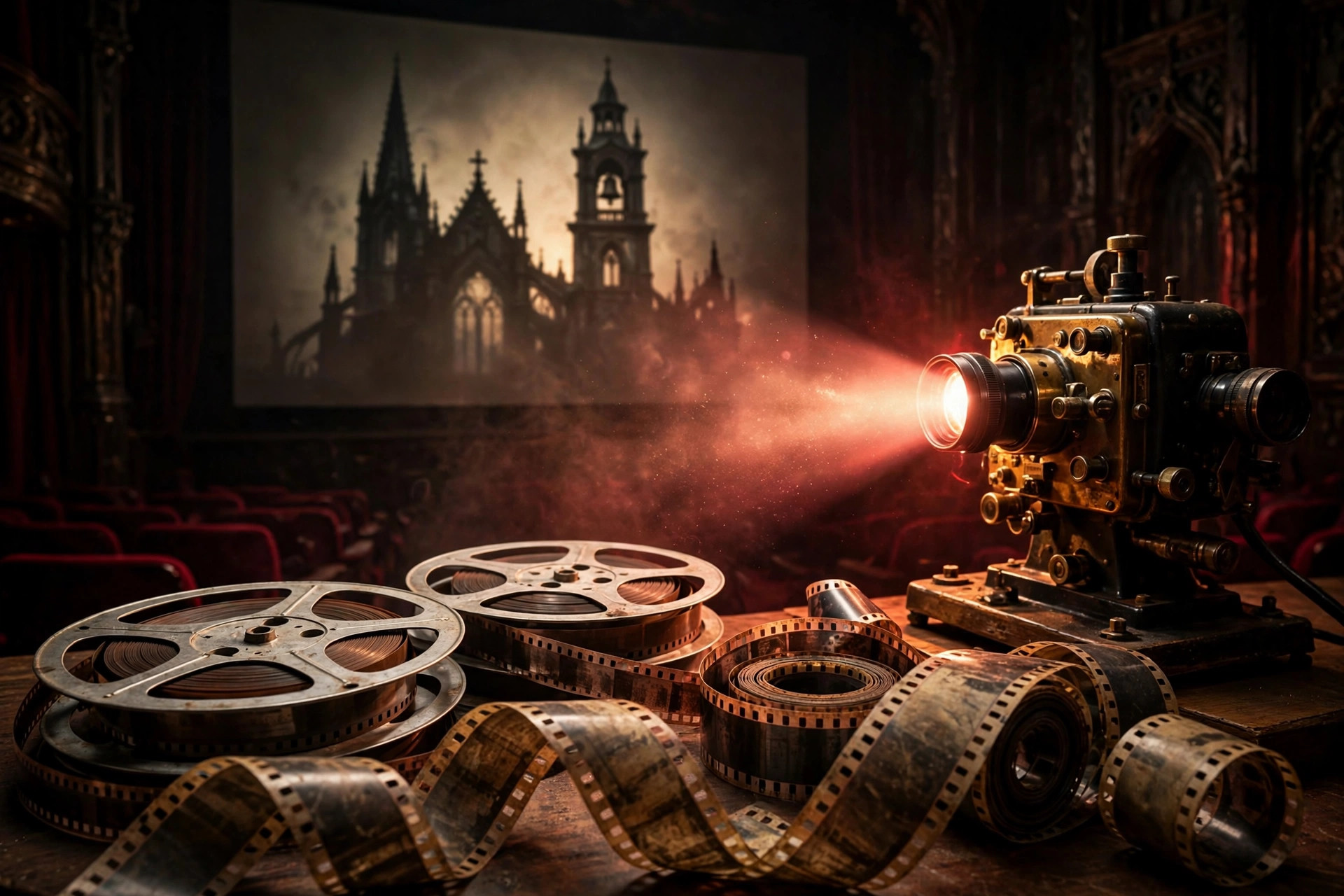
Almost two hundred years after Victor Hugo published his novel, filmmakers keep returning to the bell tower of Notre-Dame. Every hunchback of notre dame movie faces the same challenge: showing a kind, deformed man whom the world calls a monster, and making the audience care about him. From silent horror to Disney animation, here are the major screen versions and how each one retold Quasimodo’s story.
| Year | Quasimodo | Worth Knowing |
|---|---|---|
| 1923 | Lon Chaney | Silent classic; Chaney’s makeup became iconic |
| 1939 | Charles Laughton | Golden-age Hollywood; gentle, tragic Quasimodo |
| 1956 | Anthony Quinn | First color version; shot on location in Paris |
| 1982 | Anthony Hopkins | TV film; dark and faithful to the novel |
| 1996 | Tom Hulce (voice) | Disney animation; happier ending |
| 2002 | Tom Hulce (voice) | Disney direct-to-video sequel |
The 1923 Silent Version: Lon Chaney’s Monster
The first major hunchback of notre dame movie arrived in 1923, when Universal released a silent epic starring Lon Chaney as Quasimodo. Chaney, famous for transforming himself with makeup, created a look so striking that it defined the character for decades. The film stayed close to the novel’s tragic tone, and Quasimodo’s fate in this version is as bleak as the one Hugo wrote.
Without spoken dialogue, the story leaned on grand sets and expressive acting. The recreated Notre-Dame cathedral on the Universal backlot was one of the largest sets built for a silent film. Audiences of the time praised Chaney’s performance above everything else.
The 1939 Classic: Charles Laughton
The most famous hunchback of notre dame movie of Hollywood’s golden age came in 1939, with Charles Laughton in the role. Maureen O’Hara played Esmeralda, and Cedric Hardwicke played the villainous Frollo. The film arrived as Europe was sliding toward war, and its story of a mob turning on an innocent outsider carried extra weight for viewers of that era.
Laughton’s Quasimodo is gentler than Chaney’s, and the film gives him one of the most memorable moments in the character’s screen history when he claims sanctuary for Esmeralda inside the cathedral. While the ending softens the novel’s tragedy, the 1939 version remains the one many classic-film fans name first.
The 1956 Remake: Anthony Quinn in Color
This hunchback of notre dame movie was the first to be filmed in color, a French-Italian production starring Anthony Quinn as Quasimodo and Gina Lollobrigida as Esmeralda. Director Jean Delannoy shot on location in Paris, giving the film a realism the studio-bound earlier versions lacked.
Quinn plays Quasimodo as a rough, suffering figure rather than a gentle one, which divided viewers at the time. The film follows the novel’s plot closely in places but still gives the story a slightly kinder ending than Hugo’s.
The 1982 Television Film: Anthony Hopkins
A quieter hunchback of notre dame movie arrived on television in 1982, starring Anthony Hopkins as Quasimodo and Derek Jacobi as Frollo. Made for CBS, it carried a darker and more serious tone than most versions, and it stayed closer to the novel’s grim atmosphere.
Hopkins brought a wounded dignity to the bell-ringer, and Jacobi’s Frollo is one of the most chilling takes on the character. Because it was a TV production, it never got the attention of the big-screen versions, but fans of the novel often praise its faithfulness.
Disney’s 1996 Animated Film
The most-watched hunchback of notre dame movie today is Disney’s 1996 animated film, with Tom Hulce voicing Quasimodo. Disney kept the setting and the main characters but rebuilt the story for a family audience. Frollo became a cruel judge instead of an archdeacon, and new characters like the comic gargoyles were added for lighter moments.
Unlike earlier versions, this hunchback of notre dame movie gives Quasimodo a happier ending: he survives, wins the crowd’s acceptance, and walks out of the cathedral into the sunlight. The songs by Alan Menken and Stephen Schwartz, including Out There and Hellfire, made it one of Disney’s darkest and most ambitious animated films. It remains the version most people under forty know best.
The 2002 Animated Sequel
A follow-up hunchback of notre dame movie came in 2002 with Disney’s direct-to-video sequel. Tom Hulce returned as the voice of Quasimodo, who this time finds a romantic interest of his own. The sequel is lighter and smaller in scope, aimed squarely at children, and it is generally seen as a footnote next to the 1996 original.
Which Hunchback of Notre Dame Movie Should You Watch First?
Whatever hunchback of notre dame movie you start with, the heart of the story stays the same: an outcast who rings the bells above Paris and loves someone the world will not let him have. For the classic Hollywood experience, watch the 1939 version. For the most faithful tragedy, try 1923 or 1982. For the one your kids already know, it is Disney’s 1996 film. And if you want the source itself, read about Hugo’s 1831 novel before you pick a version.